Packaging Systems at Scale
Packaging design stops working when systems are not in place.
At scale, good ideas alone are not enough.
I focus on building packaging systems that support consistent execution across SKUs, formats, and teams. Clear rules, practical structures, and toolkits that reduce friction without flattening the creative.
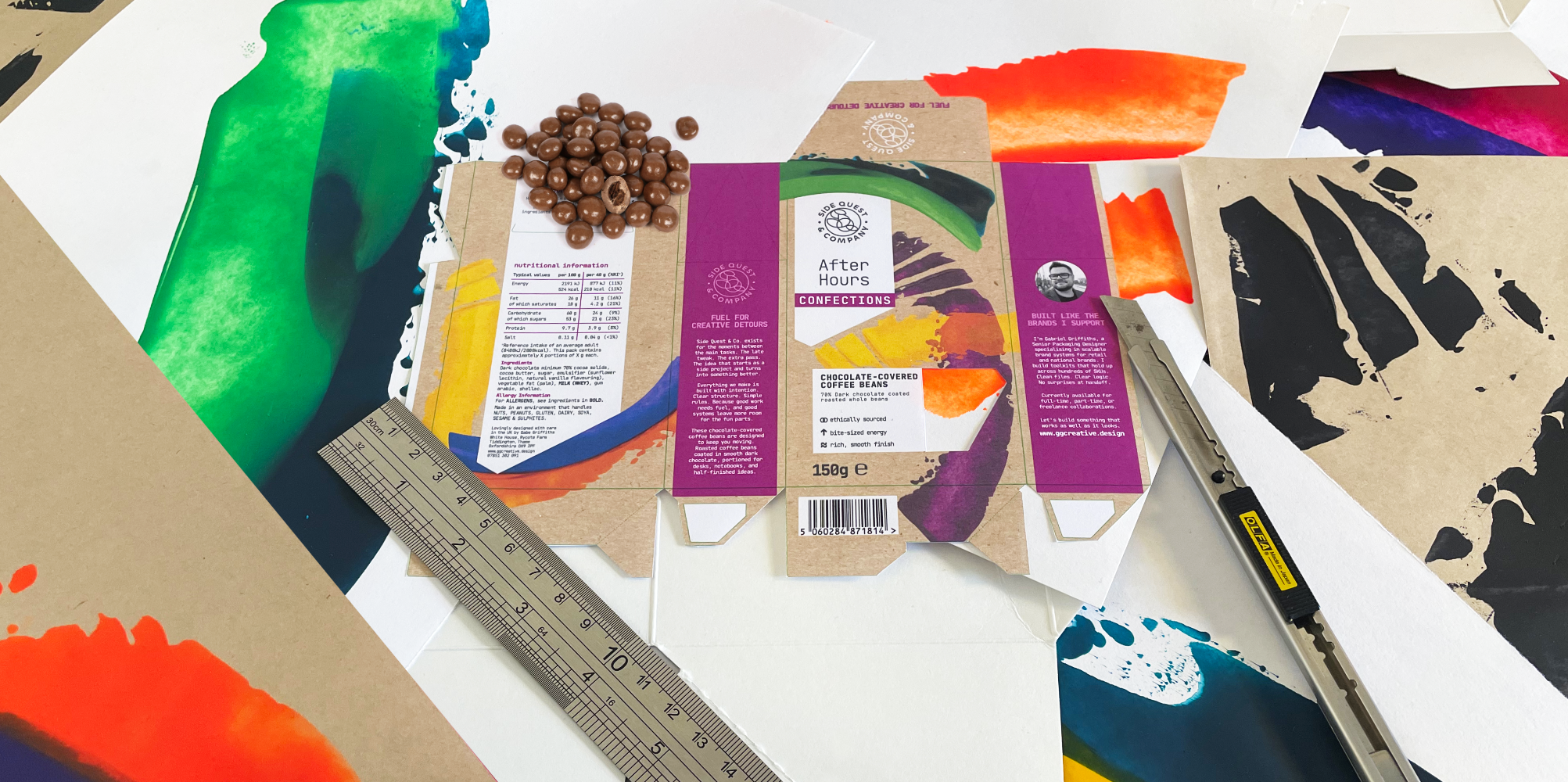
This project is a self-initiated packaging system built to show the toolkit thinking behind my work on Target’s Favorite Day and Good & Gather brands, as well as the CVS Health refresh. The full packaging portfolio is available below by password. Please get in touch for access.

Side Quest & Company
A Packaging Sandbox
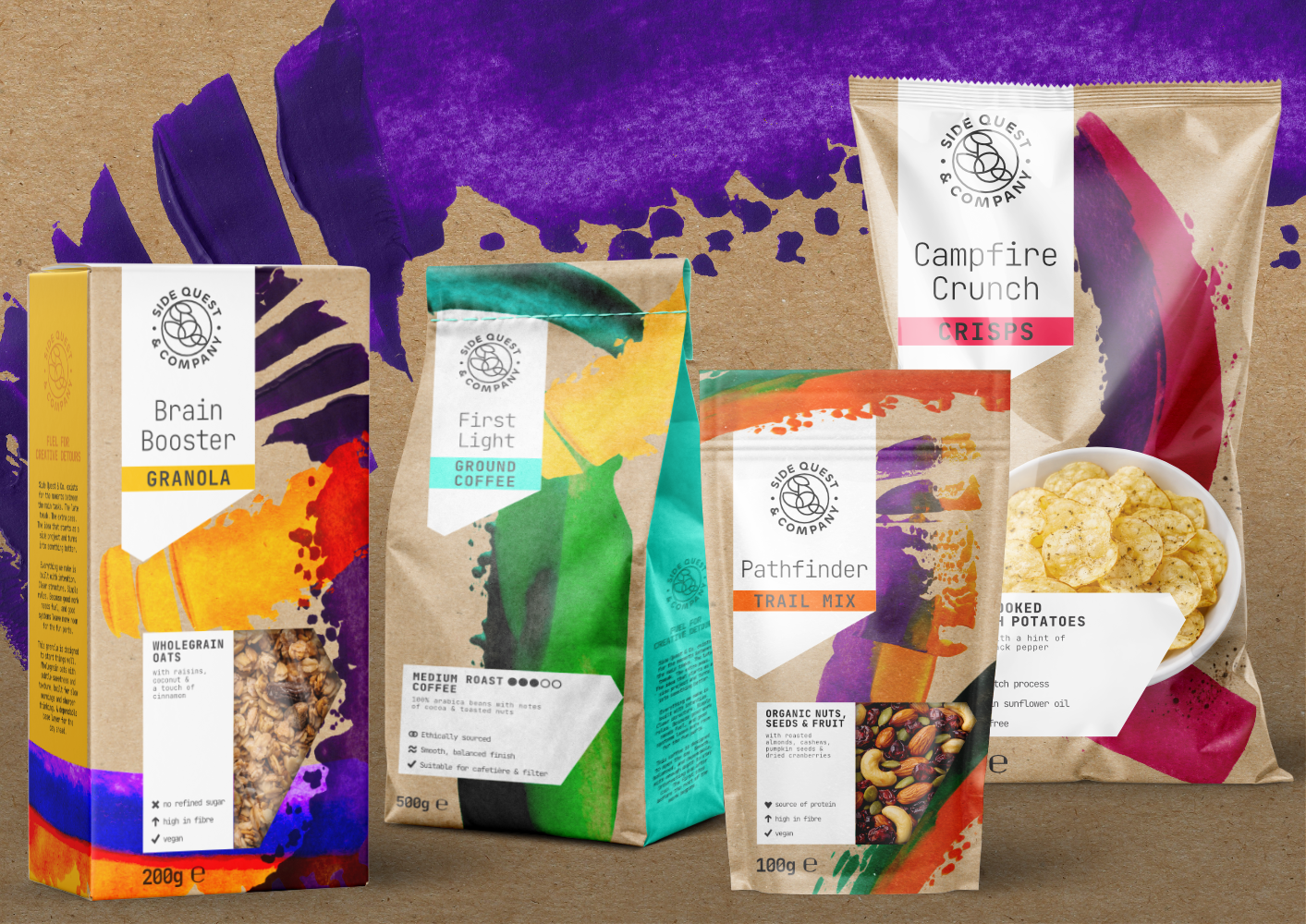
Side Quest & Co. is a self-initiated brand created to explore scalable packaging systems.
The brand itself is fictional. The constraints are not. Multiple SKUs, format changes, regulatory requirements, and future extensions are assumed from the start.
It exists to test structure, pressure decisions, and prove how toolkit thinking supports real-world packaging programmes.
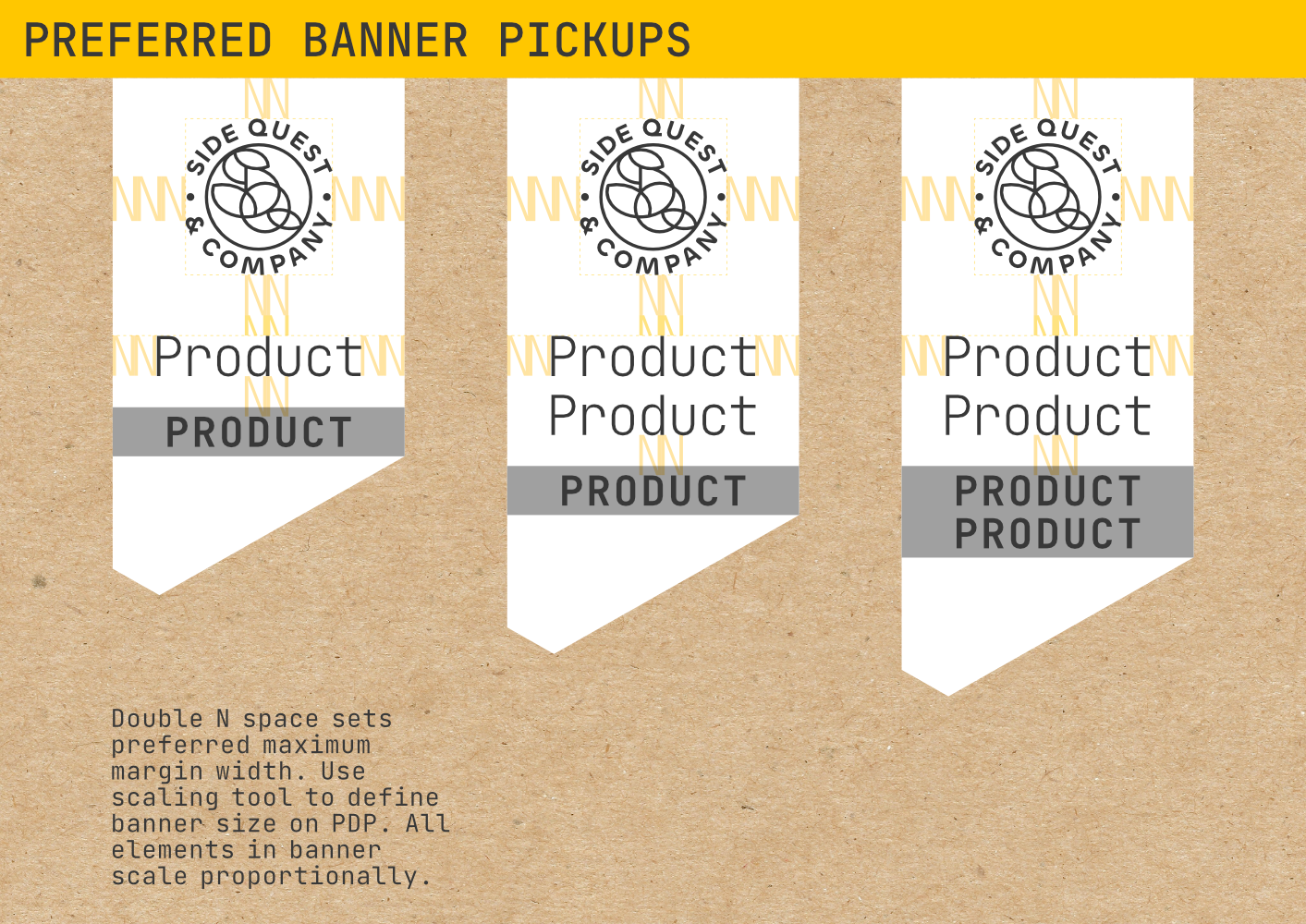
Beyond Brand Guidelines
Brand guidelines describe intent.
Toolkits define execution.
Guidelines establish tone, voice, and visual direction. Toolkits translate that intent into clear decisions designers can apply consistently across packaging.
In high-volume environments, interpretation leads to drift. Toolkits remove ambiguity and protect the brand as work scales across teams and timelines.
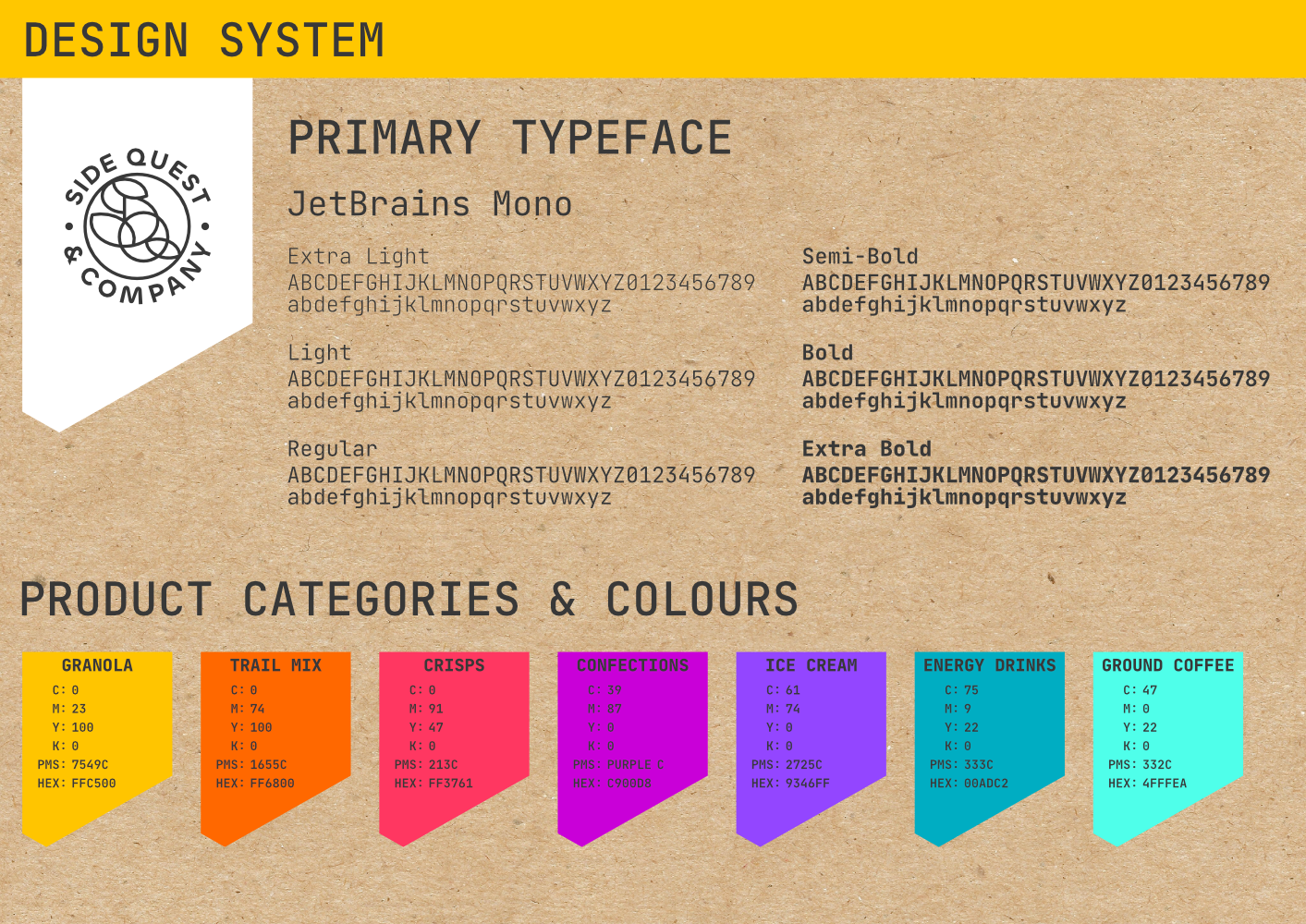
Why Toolkits Exist
Toolkits exist to protect brand integrity while increasing delivery speed.
They create a single source of truth for assets, layout logic, hierarchy, and legal requirements. They reduce rework, limit subjective decision-making, and help teams focus on solving the right problems.
At scale, consistency becomes an operational concern. Toolkits address that directly.
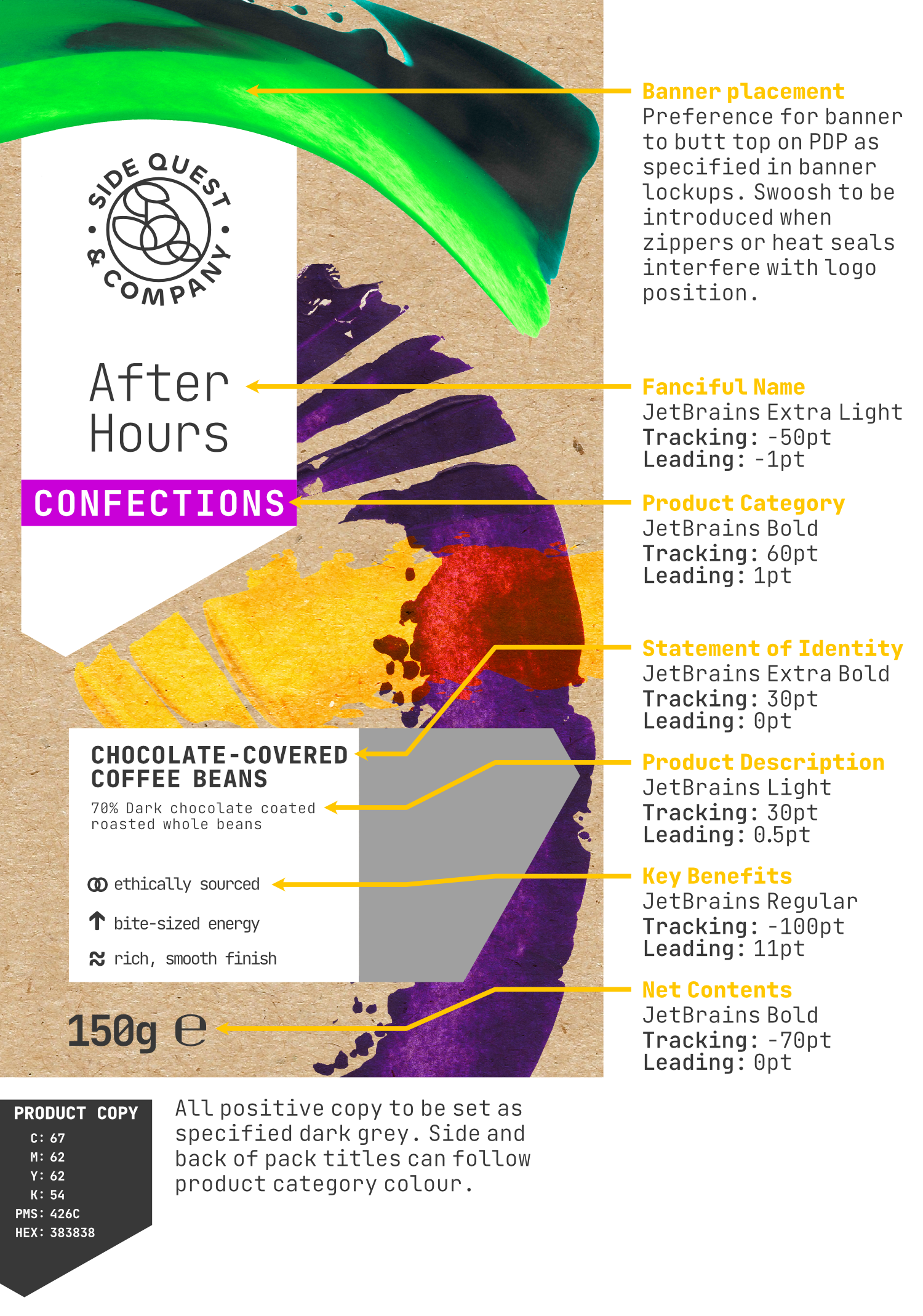
What a Packaging Toolkit Covers
A packaging toolkit focuses on the decisions designers face every day.
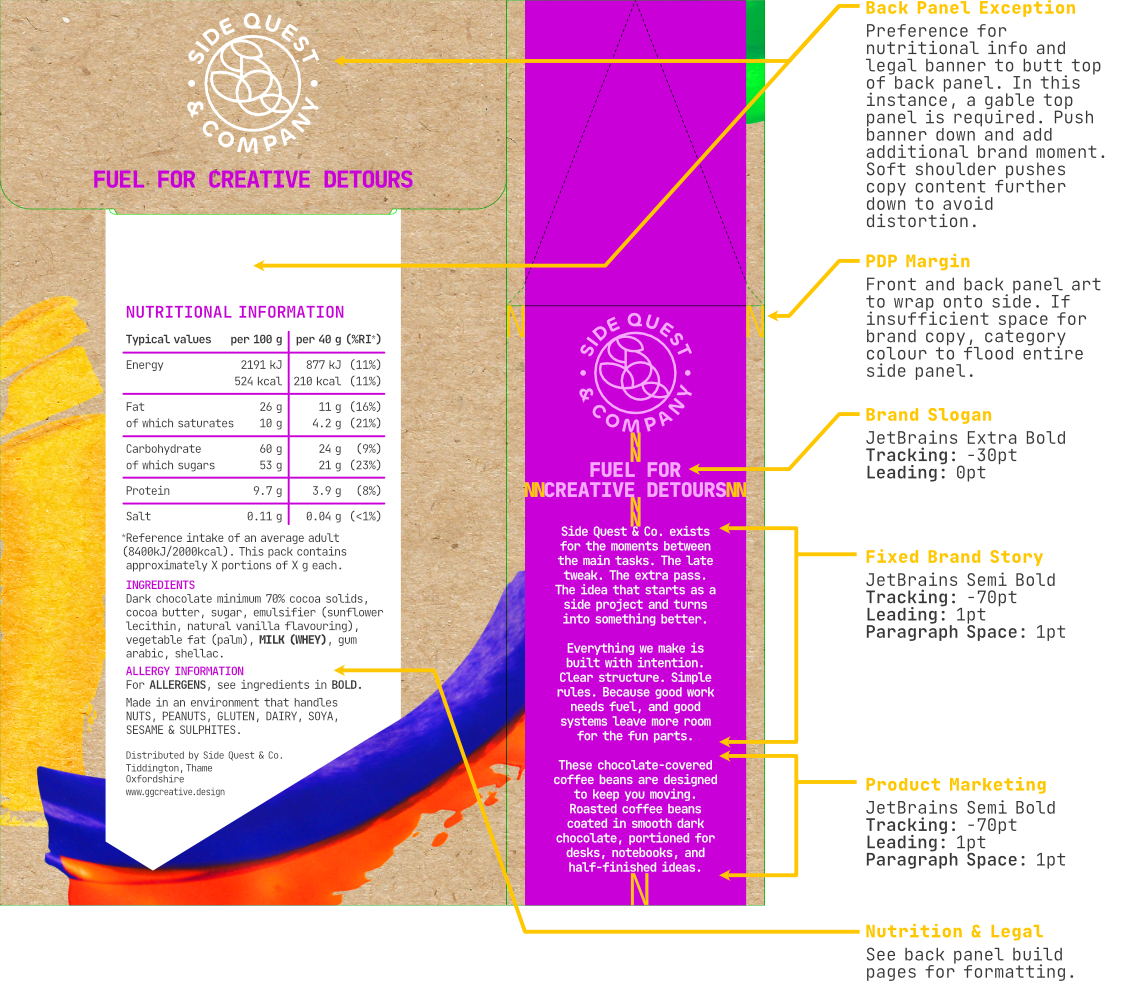
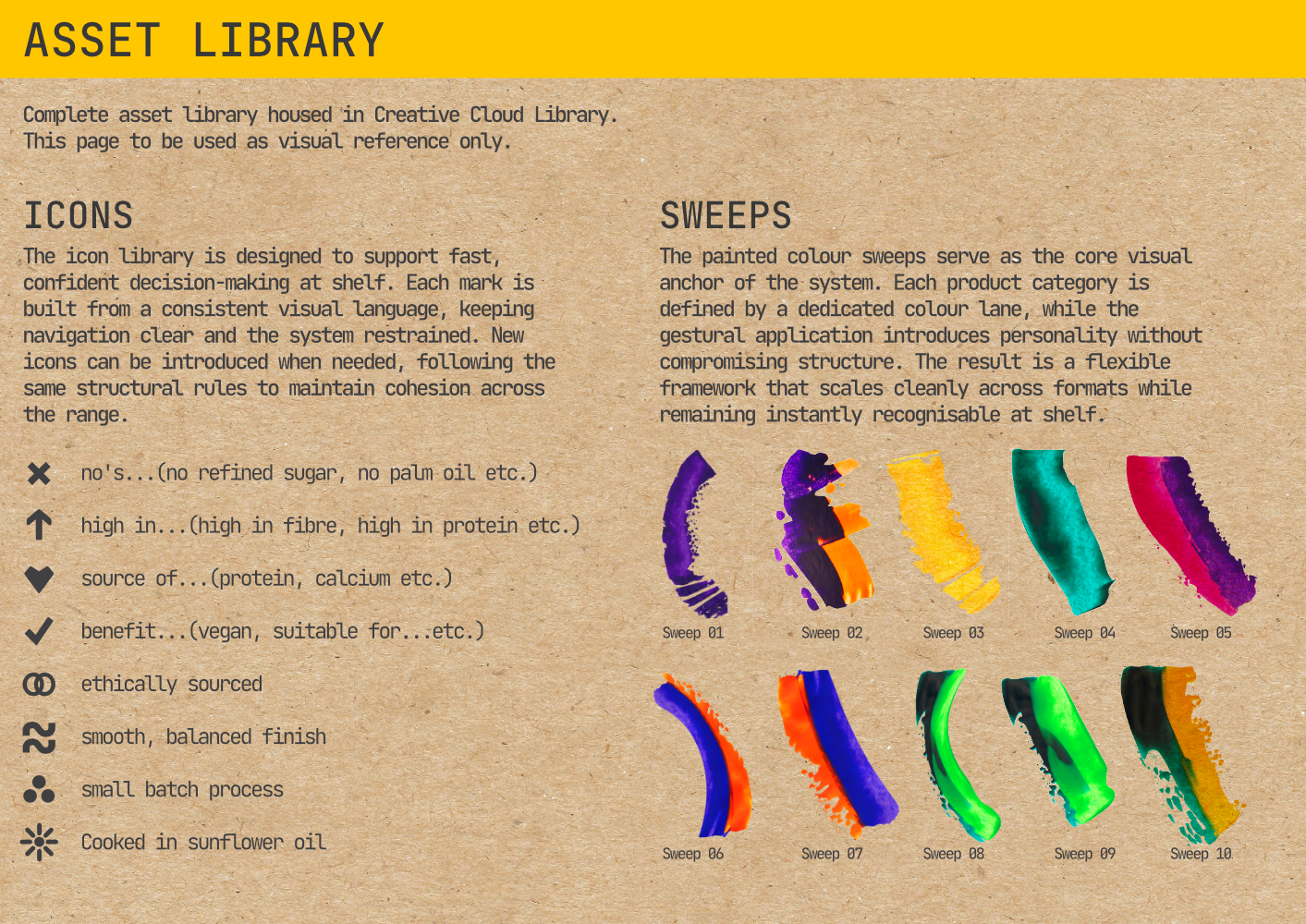
It defines what is locked, what can flex, and how changes should be handled without breaking the system. This includes structure, hierarchy, asset usage, and regulatory guardrails.
What is shown here is selective. Full systems remain tailored to each brand and programme.
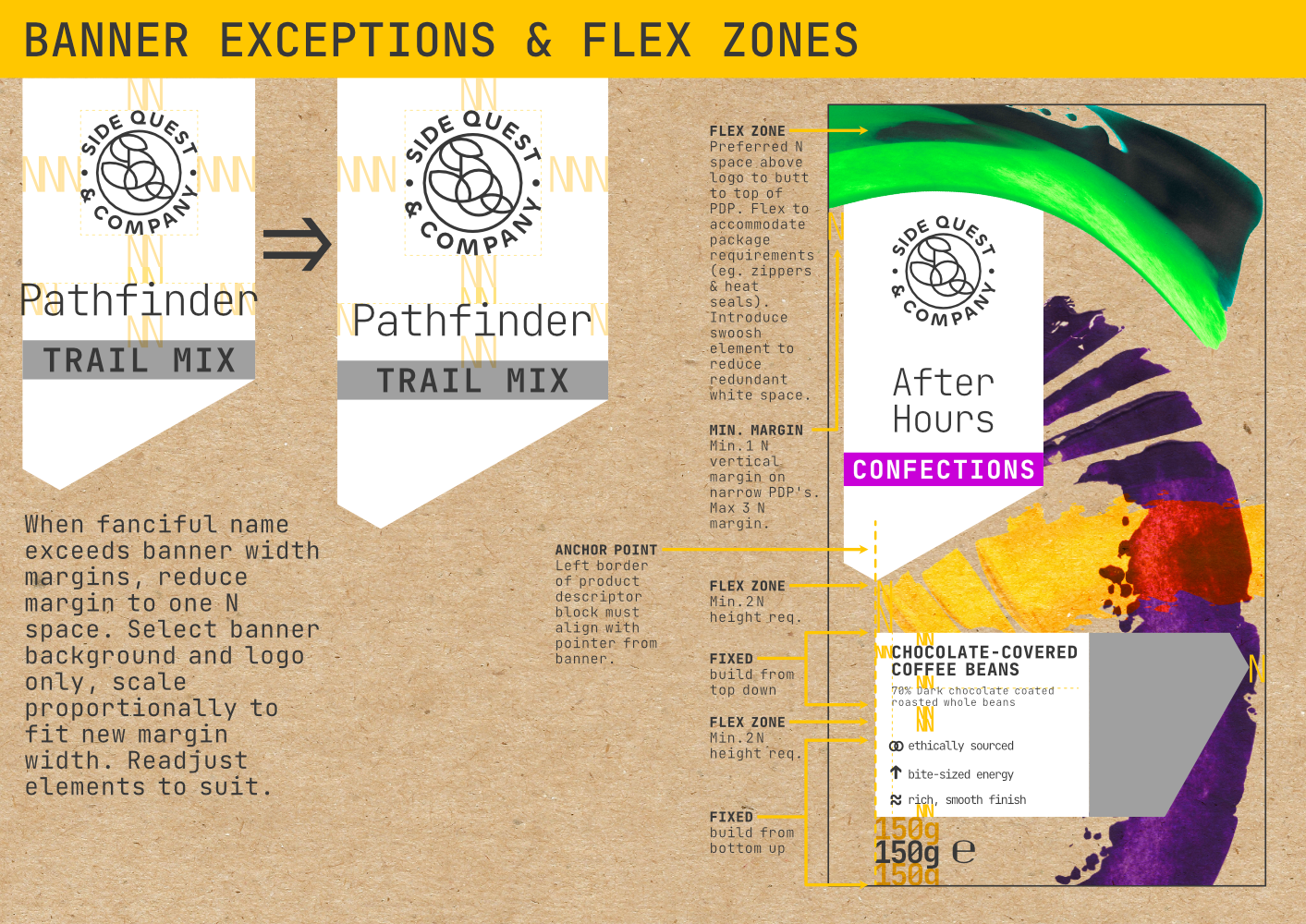
Built for Real Teams and Real Rollouts
Toolkits are designed to be practical, not theoretical.
Guidance is layered to support different levels of experience, from quick reference to deeper technical detail. Systems scale based on programme size and complexity rather than forcing a single approach.
The aim is to support onboarding, reduce cognitive load, and allow teams to work with confidence from day one through rollout.
Designing for Automation and What Comes Next
Structured systems enable automation.
Clear rules, consistent naming, and organised assets make it possible to reduce repetitive packaging tasks and remove decisions that should already be resolved by the system.
This work is not about replacing designers. It is about freeing teams to spend time where judgment and craft matter most.
Let’s Talk
Every packaging system is shaped by the brand, the team, and the scale of the challenge.
This page shows how I think, not everything I build.
If you are navigating growing SKU counts, complex rollouts, or packaging systems that no longer scale cleanly, I would be happy to talk.